

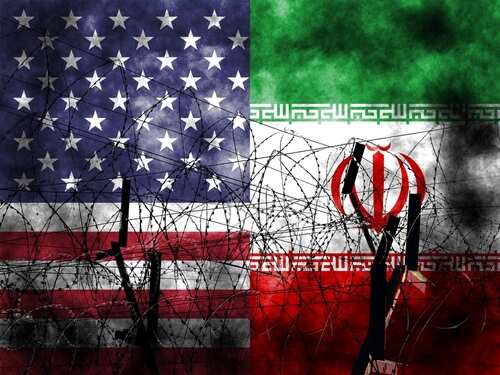
Iran’s rejection of a U.S. ceasefire offer is now colliding with Israel’s warning of “even more painful” strikes, raising the stakes for American security and global energy prices.
Quick Take
- Iran rejected a U.S. ceasefire proposal tied to dismantling its nuclear program and ending uranium enrichment in exchange for sanctions relief.
- Ceasefire talks in Pakistan ended without an agreement, and officials said the two sides were not close to a deal.
- Iran’s counterproposal demanded security guarantees, reparations, and asserted sovereignty claims over the Strait of Hormuz—terms the U.S. rejected.
- Military action continued alongside diplomacy, including reported strikes around Isfahan and Iranian attacks reaching Gulf targets such as Kuwait’s airport.
- No follow-up talks were scheduled, leaving escalation—and economic disruption risks—front and center.
Ceasefire talks collapse as pressure shifts back to the battlefield
U.S.-Iran ceasefire negotiations ended after marathon talks in Pakistan led by Vice President JD Vance and Iranian Parliament Speaker Mohammad Bagher Ghalibaf, but officials acknowledged the gap between the two sides remained wide. Iran’s leadership then publicly rejected the U.S. plan, and the war posture quickly reasserted itself. Israeli officials signaled that refusing U.S. terms would bring harsher strikes, underscoring that diplomacy and military operations are moving in parallel rather than in sequence.
For Americans watching from home, the uncomfortable reality is that the negotiating table is not functioning like a true off-ramp. Statements from Washington described talks as still “productive,” while Iran’s foreign minister denied that negotiations had occurred at all. That contradiction matters because it complicates accountability: if one side claims progress and the other denies talks exist, the public is left guessing whether escalation is a deliberate strategy or simply the default when messaging collapses.
What the U.S. offered—and why Iran said no
The U.S. proposal was described as a multi-point package combining sanctions relief with strict nuclear and missile-related demands, including ending enrichment and dismantling Iran’s nuclear program. Reports also tied the plan to reopening the Strait of Hormuz, a key global chokepoint. Iran rejected that framework and instead presented a shorter counterproposal on state television calling for an end to killings of Iranian officials, security guarantees against future war, reparations, an end to hostilities, and Iranian sovereignty over Hormuz.
Those positions do not appear to overlap much, and the mismatch is structural, not cosmetic. Washington’s offer revolves around verifiable limits on nuclear capability in exchange for economic relief, while Iran’s counterproposal centers on political and sovereignty demands that would be difficult for any U.S. administration to accept—especially one facing public skepticism about overseas commitments. With Republicans controlling Congress and Trump in a second term, the political incentives lean toward enforceable terms and clear compliance benchmarks.
Strait of Hormuz risks put energy markets—and families—on edge
Global anxiety is sharpening around the Strait of Hormuz, through which roughly one-fifth of the world’s oil normally moves. Any widening conflict that threatens shipping lanes can ripple into fuel prices, transportation costs, and household budgets. That economic vulnerability is exactly why many conservatives remain wary of policies that reduce domestic energy flexibility. If international crises can spike prices overnight, energy independence becomes less of a slogan and more of a practical shield for working families.
Escalation signals grow as attacks spread beyond Israel and Iran
Reports described new Iranian attacks reaching beyond Israel into Gulf Arab states, including an assault on Kuwait International Airport, while Israel carried out a wide wave of strikes across Iran with heavy strikes reported around Isfahan. U.S. Central Command also released video of strikes on Iranian military targets, and reporting indicated around 1,000 soldiers from the 82nd Airborne Division were being readied as a potential deployment unit. However, publicly available details on casualties and damage remained limited.
Diplomacy stalls while institutions look increasingly brittle
No additional rounds of talks were scheduled, and analysts did not expect a near-term breakthrough after senior officials returned home. UN Secretary-General António Guterres warned the fighting had exceeded limits leaders once thought imaginable and called for an end to U.S. and Israeli military action. For Americans already frustrated with government performance, this episode reinforces a familiar pattern: elites argue over process and messaging while events on the ground move faster than public oversight, and ordinary citizens absorb the financial and security consequences.
If Iran refuses US proposal, Israel vows 'even more painful' strikes: ministerhttps://t.co/4UVBQGULnq
— Insider Paper (@TheInsiderPaper) April 16, 2026
From a conservative-leaning, common-sense perspective, the central question is whether U.S. objectives remain clearly defined and achievable: preventing a nuclear-armed Iran while limiting open-ended commitments. The reports show a hardening standoff, not a converging peace plan. Until negotiators can bridge the gap between verification-based nuclear terms and Iran’s sovereignty-and-reparations demands, the most realistic near-term outcome looks like continued military pressure—paired with economic uncertainty tied to energy routes and regional stability.
Sources:
If Iran refuses US proposal, Israel vows ‘even more painful’ strikes: minister
The Latest: Iran dismisses US ceasefire plan and issues its own counterproposal