With U.S. warships circling Venezuela, concerns of military intervention grow while hopes for regime change simmer.
Story Highlights
- U.S. naval deployment near Venezuela raises fears of potential military intervention.
- The official focus is on combating drug cartels, but motives are questioned.
- The Maduro government uses the situation to rally nationalist support.
- Venezuelan opposition views the U.S. presence as a chance for political change.
U.S. Naval Buildup Raises Global Concerns
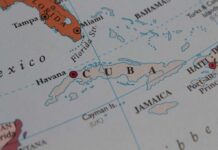
In late August 2025, the United States significantly increased its naval presence in the southern Caribbean, deploying multiple warships and thousands of personnel near Venezuela. Officially, the operation targets Latin American drug cartels, but it has sparked widespread anxiety in Venezuela about a possible U.S. military intervention. The scale of this deployment is unprecedented since previous counter-narcotics operations, raising questions about the true objectives behind it.
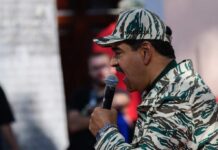
The Maduro government has leveraged these fears to rally its supporters, amplifying nationalist sentiments and portraying the U.S. as an aggressor. Meanwhile, the Venezuelan opposition sees the U.S. naval presence as a potential catalyst for regime change, hoping that international pressure will undermine Maduro’s hold on power. Within Venezuela, the tension is palpable as the government mobilizes militia groups, warning of an impending invasion.
Six US Navy ships are now off the coast of Venezuela. Their government has mobilized 4.5 million militia. We have activated the National Guard in 19 states. Are we going to go to war with Mexico and Venezuela? pic.twitter.com/o4qf0WNChR
— Rush (@Rush1776Rush) August 25, 2025
Impact on Regional Politics and Society
This naval buildup comes amid Venezuela’s ongoing political instability and economic crisis. The U.S. has long accused the Venezuelan government of corruption and human rights abuses, often citing alleged drug trafficking activities. The operation’s timing, following the doubling of the U.S. reward for information leading to Maduro’s arrest, further complicates the geopolitical landscape. Regional actors, including the Dominican Navy and Puerto Rican authorities, have expressed support for U.S. counter-narcotics efforts, yet they remain cautious about the potential for escalation.
The deployment has heightened fear and uncertainty among Venezuelan civilians, who face severe shortages and repression under Maduro’s rule. The psychological stress and fear of conflict exacerbate the already dire humanitarian situation. Economically, the increased military activity could disrupt trade and shipping in the region, impacting both legitimate businesses and illicit drug markets.
Long-term Implications and Global Reactions
The long-term implications of this U.S. naval presence could include a shift in regional power dynamics, sustained pressure on the Maduro regime, and the risk of unintended military confrontation. Analysts and officials recognize the deployment as a significant pressure tactic but see no likelihood of an imminent U.S. invasion. Some experts question the legality of the U.S. strikes on alleged drug-smuggling vessels, while others view the operation as part of a broader strategy to isolate and destabilize Maduro’s government.
As international reactions unfold, the situation remains fluid, with both the Maduro regime and Venezuelan opposition using the U.S. presence to further their respective agendas. The unfolding events will likely continue to draw attention to the complex interplay of power, politics, and social dynamics in Venezuela and the broader Caribbean region.
Sources:
Military Times: U.S. Warships in South America and the Reaction in Venezuela
Wikipedia: 2025 U.S. Caribbean Naval Deployment
Atlantic Council: Why Are U.S. Warships Heading Toward Venezuela?