
Senate investigators say federal prosecutors swept up detailed data on at least 639,000 Republican supporters, including people who bought red MAGA hats, raising sharp privacy alarms.
Story Snapshot
- A Senate memo says investigators gathered data on at least 639,000 Republican supporters, donors, and voters.
- Fields reportedly included names, addresses, dates of birth, jobs, employers, party status, and partial card numbers.
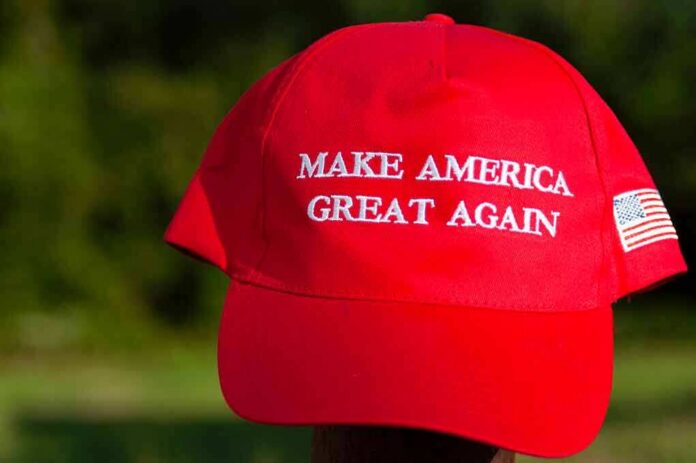
- Records allegedly captured MAGA-hat and other Trump merchandise buyers, including shipping addresses.
- Investigators also obtained nearly 4,800 physical donation checks, many for small amounts, across all 50 states.
What Senate Investigators Reported Was Collected
Senate Judiciary Chairman Chuck Grassley reported that subpoena returns tied to the Arctic Frost probe showed the Special Counsel’s office and the Department of Justice obtained a large dataset on at least 639,000 Republican supporters. The memo describes names, dates of birth, home addresses, email addresses, Republican registration status, congressional and state districts, occupations, employers, donation amounts, and the last four digits of credit cards. The earliest donor entry reportedly dates to 2005, suggesting a long lookback window.
Grassley’s office also stated that the collection reached beyond typical campaign finance records. According to the committee, the files included buyers of Trump merchandise, such as red MAGA hats, along with shipping addresses and product details. The records listed hats, shirts, mugs, and doormats from the Trump campaign store. These details point to a sweep that touched not just major donors, but also retail customers and everyday political supporters.
Small-Dollar Donors And The Scope Of The Sweep
In a separate disclosure, Grassley said the Special Counsel team obtained at least 4,782 physical checks from Americans across all 50 states who mostly made small-dollar donations to President Trump between September 2019 and August 2023. Many checks were reportedly for five to ten dollars. That level of granularity signals that the net included ordinary supporters, not only high-profile political figures or large contributors.
The Senate material links the trove to subpoenas but does not publish the underlying returns. The committee’s public releases emphasize breadth and detail while leaving out the specific legal tools used for each category, such as which subpoenas went to which vendors or data holders. The documents also do not show whether or how the data was used to target any individual supporter.
Why This Matters For Americans’ Political Privacy
The United States has long wrestled with how far the government can go to gather information while protecting citizens’ freedom of association. The Supreme Court has recognized that forced disclosure of member or donor lists can chill political activity. In 2021, the Court struck down California’s blanket donor reporting rule for charities, holding that the state failed exacting scrutiny because its demand was not closely tailored to a valid aim.
The scale and scope undermine the “specific organization funding an overthrow” framing. Grassley’s releases show Smith’s team obtained records covering at least 639,000 Republican donors, voters, and supporters, including donor data going back to 2005, small checks from thousands…
— Frank-News (@francoboca) October 15, 2026
The Senate account places this new dispute in that familiar tension. Investigators say the Arctic Frost collection reached into party status, workplaces, and home addresses. Supporters on the right will see overreach and fear profiling; supporters on the left will see a warning about power that can flip hands. Both camps share a stake in a clear line: when an investigation needs personal political data, it should be narrow, justified, and subject to strong safeguards.
Sources:
twitchy.com, judiciary.senate.gov, yahoo.com