A young father was killed by a federal officer during a deportation operation in Maine, even though he was not the man agents say they were there to arrest.
Story Snapshot
- A U.S. immigration officer shot and killed 26-year-old Colombian worker Joan Sebastián Durán Guerrero during a vehicle stop in Biddeford, Maine.
- The Department of Homeland Security says the driver tried to flee toward the officer, but the man was not the target of the deportation warrant.
- Family members and witnesses are demanding justice and answers, especially since the agents had no body cameras and details remain limited.
- The shooting is part of a growing pattern of deadly vehicle stops that has forced Immigration and Customs Enforcement to suspend most traffic stops nationwide.
What Happened During the Maine Deportation Operation
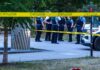
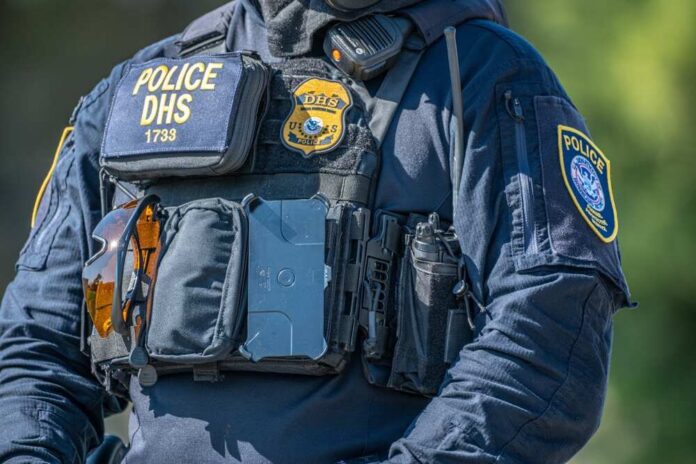
On Monday morning in Biddeford, Maine, immigration agents were watching a home linked to a person who had a final order to be removed from the country. Officials say a vehicle left that address, and agents tried to stop it as part of the deportation operation. The Department of Homeland Security (DHS) claims the driver tried to flee the scene, moving the vehicle in the direction of an officer, who then fired his weapon “fearing for public safety.” The driver, later identified as 26-year-old Colombian national Joan Sebastián Durán Guerrero, was hit, and he died from his injuries after emergency workers arrived.
Maine Attorney General Aaron Frey’s office has backed key parts of the DHS account, stating that an immigration officer was conducting a deportation enforcement action when the subject “attempted to flee in a vehicle in the direction of the officer and was fatally shot.” State Police and public safety officials are leading the local investigation, and federal agencies including the Federal Bureau of Investigation (FBI) are expected to be involved. So far, authorities have not named the officer who fired the shots, and the official timeline of events remains brief and tightly controlled.
The Victim, the “Wrong Target” Problem, and Family Demands for Justice
Very quickly after the shooting, top Maine officials confirmed that Guerrero was not the man immigration agents were supposed to be targeting. Senator Angus King said DHS told him directly that the person killed was not the intended subject of the warrant. Local and national outlets report that Guerrero was a 26-year-old father from Colombia who had authorization to work in the United States, raising hard questions about why he was treated as an “illegal alien” during the stop. Witnesses told reporters they heard Guerrero say “I tried to stop” as agents pulled him from his car, which clashes with the simple “attempted to flee” story offered by DHS.
Guerrero’s sister and other family members are now publicly demanding justice and full transparency from the government. They want clear proof of what happened and why a young father with a work permit was killed during an operation aimed at someone else. Their calls speak to a wider anger that crosses party lines: many Americans, conservative and liberal, feel that federal agencies make deadly mistakes and then hide behind vague phrases like “fearing for public safety.” This sense that ordinary lives are expendable while the system protects its own only deepens the belief that a distant “deep state” serves itself, not the people.
Missing Evidence, Policy Fallout, and a Troubling National Pattern
One major problem is evidence. Immigration agents involved in the shooting did not wear body cameras, so there is no direct video from their point of view to confirm or challenge the official account. DHS has released only short written statements and has not shared full details about how fast the vehicle was moving, how many shots were fired, or whether other options were tried before the gun was used. Neighborhood security footage shows the stop and shooting from a distance, but it cannot fully answer whether the officer truly faced an immediate, unavoidable threat.
This killing in Maine came just days after an immigration officer shot and killed Mexican national Lorenzo Salgado Araujo during a vehicle stop in Houston, Texas. In that case, the agency also said the driver tried to ram an officer with his car, and the officer fired in self-defense. After the two deaths in less than a week, Immigration and Customs Enforcement ordered most vehicle stops nationwide to be suspended while training and policies are reviewed. That pause is a strong sign that leaders know something is wrong with how these high-risk stops are being handled.
Recent reporting shows this is not an isolated issue. The Wall Street Journal and other outlets have documented at least 13 incidents since last year in which immigration officers fired at or into civilian vehicles, killing two people and injuring others. A congressional briefing says eight people have died this year in encounters with the agency, including protests and detention cases. For many Americans, the pattern looks less like “law and order” and more like a system where armed officers can make fatal errors with limited accountability, especially when their own department is leading the investigation. That feeds the shared fear, on right and left, that a powerful federal machinery is operating with rules that would never be accepted if the same things happened in a small town police force.
Sources:
youtube.com, bostonglobe.com, nytimes.com, wbur.org, usatoday.com, democracynow.org, theguardian.com, instagram.com, files.dnr.state.mn.us, americanimmigrationcouncil.org, wsj.com, anews.com.tr