
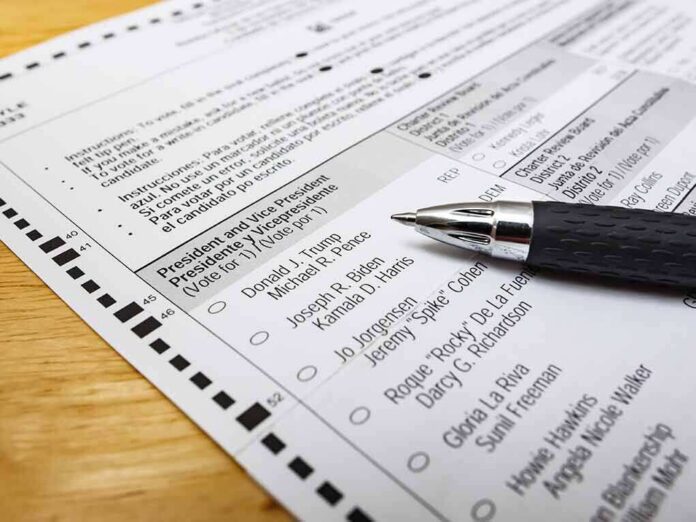
Los Angeles County told a federal court it has no independent way to confirm whether registered voters are U.S. citizens, even as the Justice Department seeks safeguards for more than 20,000 people it says are likely noncitizens.
Story Highlights
- County filing says the registrar does not maintain citizenship records and relies on sworn statements.
- Justice Department alleges 20,000-plus likely noncitizens are on California voter rolls and wants ballots set aside pending checks.
- County officials call the federal list unreliable after a small sample review and say most sampled people had not voted.
- Both sides agree on one point: the system lacks an easy, shared way to verify citizenship at scale.
What Los Angeles County Said Under Oath
Assistant Registrar-Recorder Monica Flores stated in a court declaration that the county is not equipped or authorized to verify voter citizenship using independent records. She said the office does not house immigration, naturalization, or travel data and therefore relies on a voter’s signed statement under penalty of perjury, as California law allows. This matters because it sets a clear boundary: local officials accept sworn claims but cannot run a separate citizenship check inside county systems.
County procedures work this way for most new and existing voters. When someone registers, they attest they are a citizen. The county records that attestation and processes the application. Flores wrote that, consistent with state and federal law, the registrar accepts the sworn representation and any provided proof, and does not perform extra verification beyond that filing step. That process is legal, but it leaves the county without a direct line to external citizenship databases.
What the Justice Department Is Alleging
The Department of Justice sued California on October 15, 2026. The filing says more than 20,000 people flagged as likely noncitizens are on the rolls statewide. Prosecutors asked the court to require officials to hold vote-by-mail ballots from those identified people until citizenship can be confirmed. A senior prosecutor said state and county officials refused offers to remove the names or sequester any returned ballots pending review. The request targets ballot handling, not a wholesale purge.
The federal claim uses the word “likely,” which signals that further checks are needed. The public materials do not list names, matching rules, or error rates behind the 20,000 figure. That missing detail limits what the public can verify today. The proposed fix—segregating ballots for later review—aims to reduce the chance of counting an ineligible vote without pre-judging each person’s status. The core clash is timing and feasibility during an election.
How California and the County Are Pushing Back
Los Angeles County officials said a quick review of 200 names from the federal thumb drive suggested many in the sample appeared to be citizens. They also said most people in that sample had not voted and were not sent ballots. Based on the early quality check, Flores called the October list unreliable and said work was ongoing. Registrar Dean Logan added that the federal government had not provided methods or source data to support its claim.
California Secretary of State Shirley Weber told the Justice Department the state had not received evidence proving the 20,000 names belonged to noncitizens. She said she would not disenfranchise voters based on an unsupported and likely inaccurate belief about their status. County attorneys also argued they cannot legally withhold or reject ballots solely on a third party’s allegation, especially without a reliable way to verify citizenship case by case.
Why This Dispute Hits a Nerve Nationwide
Election integrity and voter access both suffer when systems cannot confirm basics quickly and fairly. The Justice Department wants a pause on counting certain ballots until status is known. County and state officials warn that federal flags can be wrong and that rushed checks could sideline lawful voters. Past reviews show confirmed noncitizen voting is rare, which sets a low base rate and raises the risk of false matches in large list sweeps.
What Would Actually Resolve It
Two steps could bring clarity without trampling rights. First, publish the federal list’s matching rules, confidence thresholds, and a privacy-safe audit so outside experts can test error rates. Second, agree on a lawful, accurate way to verify status for flagged individuals, with clear deadlines and an appeal path. If officials cannot share data because of privacy rules, a court-appointed auditor could test matches and report aggregate error and confirmation rates.
Bottom Line for Voters
Los Angeles County admits it cannot independently verify citizenship through its own records. The Justice Department says a large group is at risk of casting ineligible ballots. California leaders say the federal evidence is thin and could wrongly target citizens. All sides expose the same flaw: America lacks a fast, trusted, and lawful citizenship check at registration and before counting. Until that gap closes, trust will keep eroding from both directions.
Sources:
nypost.com, justice.gov, townhall.com, breitbart.com, pjmedia.com, spectrumlocalnews.com, supremecourt.gov