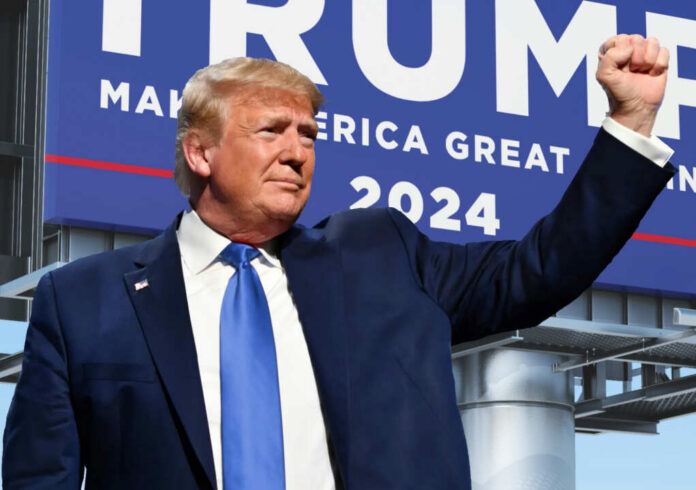
President Trump draws a hard line against Senate inaction, vowing to block all bills until the SAVE America Act secures election integrity with ironclad citizenship proof.
Story Highlights
- Trump refuses to sign any legislation until the SAVE America Act passes, demanding two strengthening changes amid 2026 midterm primaries.
- House Republicans passed the bill in February 2026 after pressure from Trump and allies like Elon Musk.
- The act mandates in-person proof like passports or birth certificates for voter registration, effective immediately upon signing.
- Critics claim it disenfranchises 21 million citizens, but White House cites overwhelming public support for voter ID.
- Trump’s ultimatum leverages presidential power to protect American elections from alleged noncitizen interference.
Trump’s Ultimatum to the Senate
President Trump publicly warned the Senate in early 2026 that he will not sign any other bills until the SAVE America Act passes with two demanded changes. The legislation, rebranded from the original SAVE Act as S. 1383, requires proof of citizenship such as passports or birth certificates for federal voter registration. House Republicans advanced it through the Rules Committee for a full vote following Trump’s pressure. This move aligns with his State of the Union emphasis on election integrity as fundamental to democracy. Allies like Elon Musk and Sen. Mike Lee back the effort to prevent noncitizen voting.
President Trump Put Senate on Notice, Announces He WILL NOT Sign Any Other Bills Until SAVE Act Passes and Demands These Two Changes to the Legislation https://t.co/Pa0iDGqniq #gatewaypundit via @gatewaypundit
— Vicki Schwartz (@VickiSchwa33222) March 8, 2026
House Passage and Key Provisions
U.S. House passed the SAVE America Act in February 2026 under Trump and Musk influence. The bill imposes nationwide strict voter ID, in-person document submission, and federal surveillance of voter rolls. Unlike prior versions, it activates immediately, granting DHS data access without safeguards. Trump calls voting a privilege, tying it to his blocked 2025 executive order on citizenship checks. Stephen Miller’s nonprofit supports petitions for these proofs. The act models strictest state regimes to nationalize secure elections.
Stakeholders and Power Plays
Trump wields veto power as the key decision-maker, with House Republicans complying swiftly. Senate Minority Leader Chuck Schumer deems it dead on arrival, facing potential filibuster bypass. Steve Bannon threatens ICE presence at polls, amplifying MAGA pressure. Critics like Brennan Center and Campaign Legal Center label it suppression, but White House notes voter ID popularity. Power dynamics pit Trump’s ultimatums against Democratic lawsuits and state resistances in places like California.
President Trump Put Senate on Notice, Announces He WILL NOT Sign Any Other Bills Until SAVE Act Passes and Demands These Two Changes to the Legislation https://t.co/4G7kkWgKTm #gatewaypundit via @gatewaypundit
— David Xu (@dave224422) March 8, 2026
Impacts on 2026 Midterms
Midterm primaries underway in states like Arkansas, North Carolina, and Texas risk chaos from immediate enactment blocking registrations. Military and overseas voters face hurdles without documents. Long-term, it enables voter purges and surveillance under Trump administration. Brennan Center estimates 21 million Americans, including low-income and name-changed women, lack ready passports. National Review cautions against overreach despite virtuous goals. Trump prepares executive orders banning mail-in ballots citing past interference claims.
Sources:
SAVE Act and Election Power Grab
Voter ID Is Overwhelmingly Popular with Literally Everyone Except Democrat Politicians
What You Need to Know About the SAVE Act