As Vladimir Putin lands in Beijing boasting of “unprecedented” Russia‑China ties, many Americans see two powerful rivals tightening ranks while their own leaders argue and drift.
Story Snapshot
- Putin says Russia‑China relations are at a “truly unprecedented level” ahead of his May 19–20 state visit to China.
- Moscow and Beijing highlight booming trade above $200 billion and growing use of their own currencies instead of the dollar.
- Both governments frame their partnership as defending sovereignty and building a “multipolar” world order.
- Analysts note the claim of “unprecedented” ties relies mostly on state rhetoric, not independently verifiable benchmarks.
Putin’s Message: ‘Truly Unprecedented’ Partnership With Beijing
Russian President Vladimir Putin released a video address shortly before his state visit to China, declaring that “today, Russia‑China relations have reached a truly unprecedented level.” He tied this claim to what he called an atmosphere of “mutual understanding and trust,” stressing that the two governments support each other on issues touching their core interests, including sovereignty and territorial integrity. Putin framed the trip as part of a long‑term strategy to deepen a comprehensive partnership with Chinese President Xi Jinping.[3][6]
Chinese and Russian state media amplified Putin’s language, highlighting his praise for regular leader‑level summits and mutual visits as a key driver of the relationship.[3][6] Putin pointed back to the 2001 Treaty of Good‑Neighborliness and Friendly Cooperation as the legal foundation for what he now calls a genuinely strategic relationship.[6] He argued that the implementation of earlier deals would pave the way for new large‑scale joint projects and claimed this cooperation serves both nations’ peoples and supports what he described as a more “just and democratic multipolar world order.”[2][6]
Trade, Currencies, and the Quiet Challenge to U.S. Economic Power
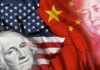
Putin and allied outlets point to trade as proof that the relationship is different than in the past. He has cited annual bilateral trade between $220 billion and $240 billion, while Chinese reporting says flows have “long surpassed” $200 billion.[4][6] Putin and Russian commentators also emphasize that most of this trade is now settled in national currencies, with some reports saying mutual settlements are conducted almost entirely in rubles and yuan instead of dollars or euros.[1][6]
Those details matter for Americans watching their own economic position. When two major U.S. rivals talk about bypassing the dollar, they are quietly testing the financial architecture that has underpinned American strength for generations. At the same time, the sources offered for these currency‑use claims are official speeches and state‑aligned media; they do not provide customs or central‑bank data that would let outsiders verify the exact share of trade settled outside Western currencies.[1][6] That gap leaves citizens wondering how much of this is real structural change and how much is political messaging.
From Diplomatic Ritual to De Facto Bloc? What We Know and What We Do Not
Putin’s narrative rests on more than one speech. Over several years he has repeatedly described ties with Beijing as based on “full trust,” and as having reached a point “that has never existed” in the two countries’ history.[3][4] Before previous meetings he and Xi Jinping announced a “no limits partnership” with no forbidden areas of cooperation, language that suggests a very broad agenda.[4] Current coverage of the Beijing visit again stresses alignment on global issues and portrays the relationship as a stabilizing force amid conflicts and Western sanctions.[3][4][6]
Yet the record also shows clear limits to what outsiders can confirm. None of the supplied materials document a formal mutual‑defense treaty or a classic military alliance between Russia and China, despite the sweeping rhetoric.[3][6] Claims that each side supports the other on “core interests” remain vague, with few concrete examples of how far either would go if the other faced a serious crisis.[1][6] The same state‑driven ecosystem that repeats “unprecedented level” offers little hard data on joint command structures, intelligence sharing, or binding security guarantees.
Why This Matters to Americans Who Feel Their Own System Is Failing
For many Americans across the political spectrum, this summit underscores a deeper worry: while Washington is consumed by partisan warfare, other powers are methodically building partnerships aimed at rewriting the rules of the international system. Putin explicitly links closer Russia‑China ties to building a “multipolar world order,” language that often signals an effort to dilute United States influence in global institutions and energy markets.[2][6] Trade in local currencies, visa‑free travel, and expanding cultural exchanges all move in that same direction.[4][6]
Russian President Vladimir Putin says Russia-China ties have reached "a truly unprecedented level" ahead of his May 19-20 state visit to China.
Putin made the remarks in a video address on Tuesday, saying, "Regular mutual visits and Russia-China top-level talks are an important… pic.twitter.com/mGOjtJqzKD— Jiemian News (@jiemian_news) May 19, 2026
At the same time, citizens frustrated with America’s own “deep state” and political elites see a familiar pattern abroad: official speeches, carefully staged visits, and big claims about progress, with very limited transparency underneath. The evidence presented so far proves that Putin is loudly advertising the partnership as “unprecedented,” but does not yet prove in measurable terms that the relationship surpasses earlier eras of cooperation.[3][6] That distinction matters, because getting past the slogans is the only way voters can judge how serious this emerging bloc really is—and what a distracted United States government is or is not doing about it.
Sources:
[1] YouTube – Putin China Visit 2026: Russian President Sends Big …
[2] YouTube – Russia’s Vladimir Putin hails ‘unprecedented’ ties with China at talks …
[3] Web – Urgent: Putin says Russian-Chinese ties reach truly unprecedented …
[4] Web – ‘Unprecedented’ Russia-China ties based on ‘full trust’: Putin
[6] Web – Putin says Russian-Chinese ties reach ‘truly unprecedented level’