When protests outside a New Jersey immigration jail turn into curfews, tear gas, and lawsuits over “inhumane conditions,” it raises the same uncomfortable question for both left and right: who is the government really protecting here?
Story Snapshot
- Protests at Newark’s Delaney Hall detention center have led to curfews, arrests, and violent clashes between demonstrators and law enforcement.
- Detainees and advocates allege spoiled food and inadequate medical care, triggering hunger strikes and fueling the unrest.
- Officials portray the scene as a dangerous riot driven partly by out-of-state agitators, while activists claim police are beating peaceful protesters and blocking access.
- Restricted access to the facility and competing media narratives leave the public relying heavily on government and partisan framing instead of full facts.
How the Delaney Hall Protests Turned Into a Street Battle
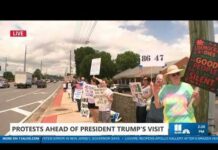
Protests outside the Delaney Hall immigration detention center in Newark began after immigrant advocates said detainees launched a hunger strike over alleged poor living conditions, including inedible, moldy food and inadequate medical care.[1][2] Over the following days, demonstrations escalated after dark, with repeated clashes between protesters and officers from federal immigration authorities, New Jersey State Police, and eventually Newark Police.[1][4] Reporters on scene described a calm daytime atmosphere that regularly flipped into volatile confrontations at night, with injuries and arrests on both sides.[1][4]
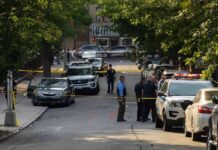
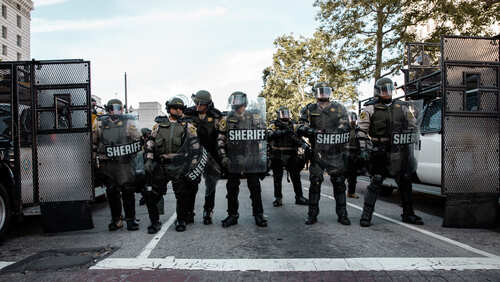
Officials responded by tightening control of the area around the facility. Newark Mayor Ras Baraka imposed a 9 p.m. to 6 a.m. curfew within a half-mile radius of Delaney Hall after a weekend of violent clashes between protesters, immigration officers, and state troopers.[1][2] New Jersey’s governor deployed state police to create designated “peaceful demonstration zones,” but skirmishes still broke out as protesters tried to block vehicles and officers moved in to clear access roads.[1][2] Dozens of people accused of violating the curfew were arrested, with some nights calmer only after a strong police show of force.[1][2]
Violence, “Feral” Protesters, and the Official Narrative
Authorities have framed the unrest as a dangerous riot rather than a protest gone wrong. Federal and local officials say some demonstrators assaulted officers by biting, kicking, and punching during late-night confrontations, sharing images of bloody wounds to argue these are not “peaceful protests.”[1][3] A Department of Homeland Security official said visits were suspended because the “violent riots” outside made it unsafe for officers, detainees’ families, and lawyers to access the facility.[3] State officials also reported that multiple individuals were arrested in possession of weapons, although details about the number and type are still limited.[3]
Media outlets that emphasize law-and-order concerns have leaned into this framing. One national outlet reported that state police “encircled agitators who broke curfew” and described at least twenty arrests, quoting officials promising “zero tolerance for rioters.”[2] A Department of Homeland Security statement characterized some detainees as “the worst of the worst criminal illegal aliens,” including alleged murderers and armed offenders, reinforcing the idea that the facility houses dangerous people and that protests threaten public safety.[4] This narrative resonates with citizens who worry that immigration enforcement has been undermined and that street protests too often slide into chaos.
Hunger Strikes, Lawsuits, and Claims of Inhumane Conditions
Advocates and many detainees tell a very different story, focusing on conditions inside Delaney Hall rather than violence outside. Independent reporting links the protests directly to detainee complaints of spoiled food, moldy meals, and inadequate medical care, which led some detainees to launch hunger strikes.[2][3][4] Demonstrators say they are calling for better conditions, the resumption of visitation, and in some cases the closure of the facility and release of detainees.[1][3] For these groups, the curfew and police response look less like public safety measures and more like an effort to silence criticism of the detention system.[1]
Protests spurred by allegations of bad conditions at Delaney Hall in Newark have led to violent clashes, arrests and the implementation of a protest zone and a curfew. https://t.co/vGycA603U4
— NBC Los Angeles (@NBCLA) June 3, 2026
State-level action underscores that conditions are not just an activist talking point. New Jersey has sued GEO Group, the private company operating Delaney Hall, seeking full access for health inspectors who say they were denied entry to medical units, sleeping quarters, and bathrooms. A sitting United States senator was allowed inside to meet detainees and operators, while the New Jersey governor and health officials were reportedly blocked from a full inspection.[4] Journalists also face restricted access, and legal experts note that state leaders have limited authority over a federal facility, leaving both residents and protesters dependent on partial, often conflicting accounts.[4]
What This Fight Reveals About Power, Transparency, and Public Trust
The Delaney Hall standoff follows a familiar pattern in American politics where immigration enforcement, private detention contracts, and protest policing collide. Strong, camera-ready claims about “rioters” or “peaceful protesters” land long before the public can see body-camera footage, arrest affidavits, or full inspection reports.[1][2][3][4] Partisan outlets amplify whichever storyline fits their audience, turning a local oversight dispute into another national proxy war over borders, policing, and elite unaccountability.[1][2][3][4] That dynamic leaves many citizens convinced that both sides are being spun instead of informed.
For conservatives who worry about border chaos and spiraling crime, images of officers with bloody wounds and talk of out-of-state agitators confirm fears that authorities are losing control of the streets.[1][2][3] For liberals who focus on human rights and inequality, hunger strikes, moldy food allegations, and blocked inspections fit a pattern of vulnerable people abused behind closed doors while officials hide behind jurisdictional excuses.[2][4] In both readings, the common thread is a federal system—backed by private contractors and overlapping agencies—that operates with limited transparency and appears more focused on managing optics than fixing underlying problems.[3][4]
Sources:
[1] YouTube – ‘These people are feral’: Nick Sortor on violent protests in NJ over …
[2] YouTube – Violence erupts at Newark ICE detention center protests
[3] Web – Police at New Jersey ICE facility arrest at least 20 agitators …
[4] Web – Family visitations to resume at New Jersey immigration …