

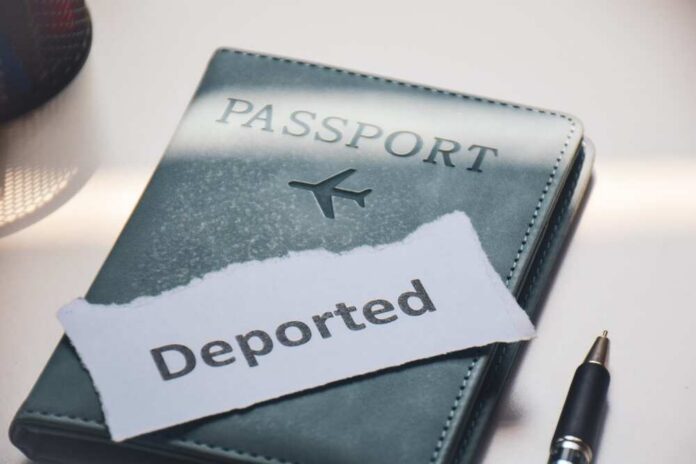
When a little-documented deportation case of a Mauritanian man accused of faking a gay-asylum claim becomes a political trophy, it exposes how easily the government can ask the public to “trust the system” while keeping the real evidence locked away.
Story Snapshot
- The case is being cited as proof the Trump administration is cracking down on “fraudulent” asylum claims, but no public record confirms an official fraud finding.
- Mauritanians have been detained and deported before, and rights groups say deportees can face discrimination, abuse, and even jail on return.[3]
- Human-rights reporting shows Mauritania uses mass arrests and deportations in its own migration control, complicating any claim that removals are simply “routine.”[1][4][5]
- Advocates and data show proven asylum fraud is rare, yet individual cases are routinely weaponized in a broader political fight over immigration.[2][3]
How One Murky Case Became a Symbol in the Fraud Debate
Media coverage from a partisan outlet claims the Trump administration is deporting a Mauritanian man who allegedly pretended to be gay to gain asylum, holding this up as proof that Washington is finally serious about ending fraudulent claims. Yet the publicly available record you supplied does not include the man’s name, case file, or any immigration judge or court decision formally finding that he lied. Without that documentation, the fraud allegation is an accusation, not an established fact.[2][3]
Immigration enforcement against Mauritanians is not new, which helps the narrative feel plausible even when details are missing. In 2018, for example, federal immigration officers detained Goura Ndiaye, a Mauritanian father and entrepreneur, at a routine check-in and deported him, forcing him to flee again to Senegal after reporting danger in Mauritania.[3] Community leaders in Columbus, Ohio have described waves of detentions and deportations of Mauritanians, reinforcing a sense of targeted enforcement under Trump.
Conditions in Mauritania Raise Real Protection Concerns
Human-rights and migration-monitoring groups describe Mauritania as a country where migrants and returnees can face mass arrests, collective expulsions, and arbitrary detention. A report by the Mauritanian Association of Human Rights cited 1,200 deportations in a single month of 2025 as part of a broader campaign tied to European Union migration deals.[1] The Global Detention Project similarly documents large-scale arrest and deportation practices as Mauritania positions itself as a “bulwark” against irregular migration.[4][5]
Civil- and human-rights organizations in the United States argue that Mauritanians deported from America face serious risks upon return. A joint statement by the Catholic Legal Immigration Network and more than 160 allied groups warns that deportees can encounter discrimination and inhumane treatment and that some are jailed on arrival without formal charges or due process. Another advocacy analysis notes Black Mauritanians may face violence, enslavement, and even death if forced back, underscoring why many seek asylum in the first place.[2]
Asylum Fraud Is Real, but Documented Findings Are Rare
Federal agencies do maintain tools to detect and punish asylum fraud. The Fraud Detection and National Security Directorate within United States Citizenship and Immigration Services embeds personnel in asylum offices, conducts background checks, verifies documents overseas, and can refer cases for criminal investigation.[2][5] The Executive Office for Immigration Review operates a Fraud and Abuse Prevention Program to investigate fraud in immigration courts, and individuals found to have filed a fraudulent asylum application are barred from applying again.[2][5]
Despite those mechanisms, available data suggest proven fraud is relatively uncommon. A detailed fact sheet on asylum fraud notes that terminations of asylum status specifically due to fraud are “extremely uncommon,” and that a simple denial of an asylum claim should not be confused with proof of fraud.[2] Advocacy groups emphasize that the asylum system already imposes strict evidence and credibility demands; many applicants with genuine claims lose because they cannot meet intense documentation or because outcomes vary widely by judge.[2][3]
Weaponizing Individual Cases While Keeping the File Secret
Across administrations, politicians and media outlets have turned individual asylum cases into symbols for bigger ideological battles over border control, fraud, and national identity. Analysts have documented how a handful of anecdotes about false claims are often used to paint a picture of a system “rife” with fraud, even though the broader data do not support that narrative.[3] At the same time, rights groups highlight cases where immigrants protected by settlements or orders were still targeted for removal, raising concerns about rule-of-law consistency.
For Americans on both the right and the left who distrust the federal government, this Mauritanian case fits a disturbing pattern: officials and pundits invite the public to cheer a supposed victory over fraud without releasing the underlying evidence. Conservatives who want a tough, honest asylum system are asked to take it on faith that the man lied. Liberals who fear abusive deportations are likewise forced to argue from partial information. Either way, a powerful bureaucracy keeps the full record sealed, while elites in media and politics spin the story to suit their agenda instead of giving citizens the facts they need to judge for themselves.[1][2][3]
Sources:
[1] Web – One Migrant Learned the Trump Administration Is Serious About Ending …
[2] Web – Mauritania: Massive arrests and deportations of migrants as a result …
[3] Web – TPS for Mauritania: The Case for Urgent Action – FWD.us
[4] Web – Goura Ndiaye: Father & Entrepreneur, Living in Exile with …
[5] Web – Mauritania – Global Detention Project